
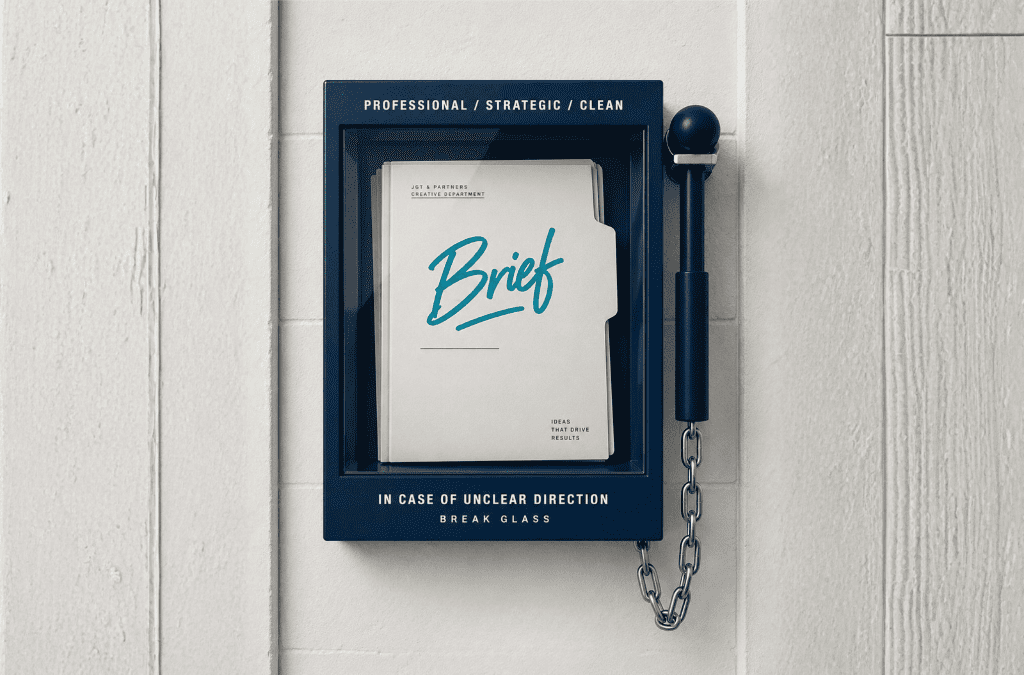
A creative brief for marketing campaigns is often treated as the document that comes before the “real work” starts.
But in a performance-driven marketing campaign, the creative brief is part of the real work.
Before designers start designing, copywriters start writing, or media teams start launching campaigns, one critical question needs to be answered:
Does everyone understand what the creative is supposed to achieve?
When the answer is unclear, execution becomes a series of assumptions.
Those assumptions can lead to unnecessary revisions, inconsistent messaging, wasted time, and creative work that may look good without necessarily supporting campaign performance.
A strong creative brief reduces that ambiguity by aligning strategy, creative, and media around the same objective from the beginning. Here are the key elements every effective marketing creative brief should include.
1. Start With the Campaign Context
Before deciding what the creative should look like, start by defining what the business or campaign is trying to solve.
Ask:
- What is happening in the business or market?
- What challenge or opportunity does the campaign need to address?
- What business objective should the campaign support?
- What role will this particular piece of communication play?
Without this context, a creative team can execute a request perfectly while still solving the wrong problem.
A strong creative brief connects execution to the wider marketing and business objective. This becomes even more important when campaigns operate across multiple touchpoints, where consistency and alignment are essential to building an effective integrated campaign.
2. Understand the Audience Moment
Defining the target audience is only part of an effective creative strategy.
Teams also need to understand the moment in which the audience encounters the message.
Consider:
- What is the audience doing at that moment?
- What might they already know about the brand or offer?
- What are they thinking about?
- What problem are they trying to solve?
- What other messages are competing for their attention?
The same audience may respond very differently depending on where, when, and how they encounter a campaign.
Understanding the audience goes beyond basic demographics. Building a detailed buyer persona
can help teams identify motivations, behaviors, pain points, media habits, and the factors that influence how people respond to communication.
The audience moment therefore matters not only for creative development, but also for media planning and overall campaign performance.
3. Make the Core Message Clear
A good creative brief should force one important decision:
What is the one thing the audience must understand?
When every product benefit, feature, message, and proof point becomes equally important, the creative quickly becomes crowded.
Clear prioritization gives the creative team something far more valuable than additional information: direction.
The stronger the message hierarchy, the easier it becomes to create communication that audiences can understand quickly.
This clarity also helps maintain consistent brand messaging across different channels and formats, especially when a campaign includes multiple creative assets.
4. Define the Desired Audience Action
Effective marketing creative should not stop at attracting attention.
It should also clarify what happens next.
Should the audience:
- Explore a product or service?
- Learn more about an idea?
- Register for an event?
- Contact the business?
- Request more information?
- Consider an offer?
- Make a purchase?
The desired action influences the creative hierarchy, call to action, messaging, format, and even the media placement.
By defining that action in the creative brief, teams can build communication around a clear next step rather than treating the CTA as an afterthought.
5. Establish the Creative Boundaries
Strong creative briefs create freedom by removing uncertainty.
That means clearly defining the practical requirements of the campaign, including:
- Format requirements
- Brand guidelines and visual cues
- Mandatory messages or elements
- Required deliverables
- Platform specifications
- Campaign deadlines
- Legal or compliance requirements, when applicable
These elements should not be seen as restrictions on creativity.
Instead, they create a clearly defined space in which creative thinking can work more effectively.
The same principle applies to creative media planning and buying:
strong ideas perform best when they are designed with the platform, placement, audience, and campaign environment in mind.
Better Creative Briefs Lead to Sharper Campaign Execution
Campaign speed does not always come from starting design earlier.
Sometimes, it comes from eliminating the questions that would otherwise appear later.
A well-structured creative brief helps align strategy, creative, copy, and media teams around the same campaign objective before execution begins.
It can help:
- Reduce unnecessary revision cycles
- Improve message consistency
- Clarify the role of each creative asset
- Align creative execution with marketing objectives
- Create a stronger connection between creative work and campaign performance
The strongest campaigns do not treat creativity and media as separate disciplines. They connect the right message, the right audience, the right platform, and the right objective from the beginning.
That is why we see the creative brief as more than documentation.
It is a performance tool.
Brief clearly before you create quickly.
Ready to Turn Your Creative Brief Into Better Campaign Performance?
A stronger campaign starts with clearer thinking. If you need support aligning your strategy, creative, media, and performance objectives, JGT&P can help you build the right path from brief to execution.
Start the Conversation With JGT&P →
Chat With Us on WhatsApp →
Your Growth Companion.